
Security Camera Installation
We specialize in security camera installation in Moncton tailored to the unique needs of your home or business.
See More. Know More. Protect More.
A professionally installed security camera system does more than record footage—it helps you stay aware of what’s happening around your property at all times. Whether you’re protecting your family, employees, customers, or valuable assets, modern surveillance technology provides the visibility and confidence needed to make smarter security decisions.
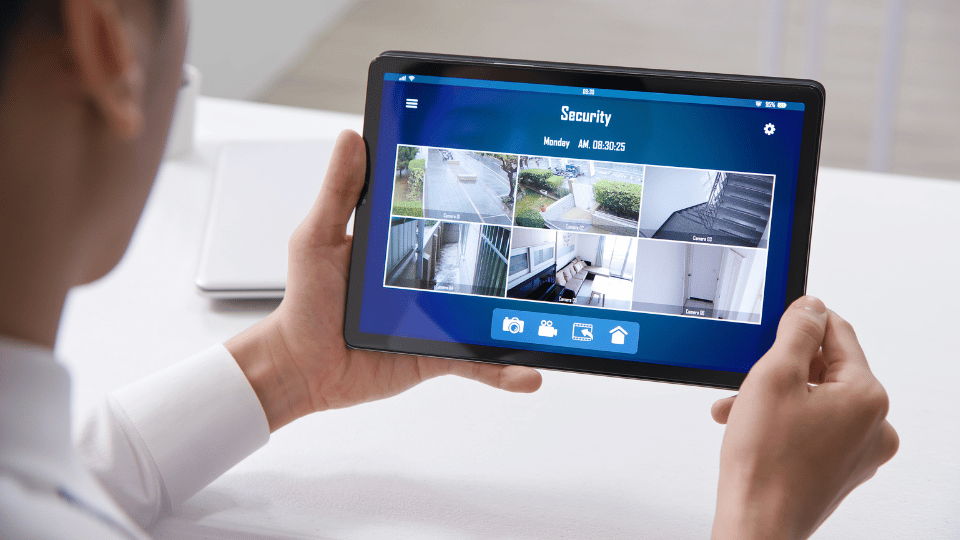
At CornerTech Solutions, we design and install customized security camera systems for homes and businesses throughout Moncton, Dieppe, and Riverview. Our solutions feature high-definition video quality, night vision capabilities, remote viewing from your smartphone or tablet, motion-triggered alerts, cloud and local recording options, and advanced monitoring features that help you respond quickly to potential threats.
Any connection type
There are pros and cons to wired, wireless, and hybrid. We will help you navigate that and install the right solution for you.
Remote Live Viewing
Check in on your home or business 24/7 through a secure, encrypted mobile app.
No Subscription Fees
Options for local NVR storage or hubs mean you own your footage without being locked into a recurring bill.
Active Deterrence
Built-in spotlights and sirens that can trigger automatically when an intruder is detected.
Evidence Ready
Easily clip and share HD footage directly with local authorities or insurance providers if an incident occurs.
Our Core Services
Expert Security Camera Install
Indoor Security Cameras
Keep an eye on what matters most with clear, reliable indoor monitoring.
Outdoor Security Cameras
Protect your property day and night with weather-resistant surveillance solutions.
PTZ Cameras (Pan-Tilt-Zoom)
Monitor larger areas with advanced cameras that move, track, and zoom in on activity.
Commercial Surveillance Systems
Enhance business security with scalable surveillance systems designed for complete coverage.
Why choose next-gen security cameras?
Next-generation security cameras provide sharper video, smarter detection, remote access, and greater peace of mind than traditional surveillance systems.
4K Ultra-HD Resolution
Crystal clear video quality that allows you to zoom in on faces and license plates with perfect clarity.
Color Night Vision
Advanced low-light sensors that provide full-color video even in total darkness, unlike standard grainy black-and-white footage.
Smart AI Detection
Intelligent cameras that distinguish between people, vehicles, and animals to filter out frequent false alarms.
Two-Way Audio
Speak directly to delivery drivers or visitors through your cameras using your smartphone from anywhere.
Weatherproof Durability
Heavy-duty hardware designed specifically to withstand New Brunswick's harsh winters and heavy rain.
Our Long Term Support
CornerTech Solutions offers top-notch security camera installations tailored to your needs. Our expert team ensures your property is protected with the latest technology and reliable service.
Installation Process
We provide a seamless installation experience, from consultation to setup. Our technicians are trained to handle various cameras, ensuring optimal performance and security for your premises.
Maintenance and Support
Regular maintenance is crucial for security systems. We offer ongoing support and inspections to ensure your system operates effectively, giving you peace of mind and reliable protection.
Customized Solutions
Every property is unique. We design customized security solutions that fit your specific requirements, ensuring comprehensive coverage and advanced protection tailored just for you.
Let’s Make Your Home Safer
Secure your home with next-gen cameras, real-time alerts, and live mobile monitoring.
The Comprehensive Guide to Commercial & Residential Security Camera Installation in Moncton
If you own property in Moncton — whether that’s a cozy bungalow in the North End, a retail storefront downtown, or a warehouse out near the industrial park — you already know something the rest of Canada sometimes forgets: our winters don’t mess around. Ice storms roll in fast, snow piles up overnight, and temperatures can nosedive without warning. That reality changes everything about how you should think about security camera installation Moncton property owners actually need, versus the generic setups sold everywhere else.
At CornerTech Solutions, we’ve spent years designing surveillance systems specifically built for Maritime conditions. We’re not just slapping up cameras — we’re engineering infrastructure that survives freezing rain, deep cold snaps, and the kind of humidity swings that kill cheaper equipment within a season. This guide walks through everything you need to know before you invest in security camera installation Moncton residents and business owners can actually rely on, from system architecture to pricing to winter durability.
Choosing the Right Security Camera System for Your Moncton Property
Let’s start with the fundamentals. Not every camera system is built the same, and the right choice depends heavily on your property type, your budget, and how much winter abuse the hardware needs to survive.
Wired vs. Wireless Architecture
Wired systems — specifically Power over Ethernet (PoE) setups — send both data and electricity through a single Cat6 cable. That means no batteries to charge, no Wi-Fi dropouts, and no scrambling to swap power packs when it’s minus twenty outside. Wireless systems are more flexible and faster to install, especially for renters or smaller residential jobs, but they lean on battery life and local Wi-Fi strength — both of which take a real hit in cold weather.
For any security camera installation Moncton job involving exterior cameras, we almost always recommend wired PoE. It’s simply the more dependable architecture for our climate.
Indoor vs. Outdoor Structural Demands
Indoor cameras don’t need to fight the elements, so they can prioritize discretion and aesthetics. Outdoor units are a different story entirely — they need weatherproof housings, wide operating temperature ranges, and mounting hardware that won’t crack when ice forms around it. We treat outdoor camera placement as a structural engineering problem, not just a security one.

Dome vs. Bullet vs. Turret Configurations
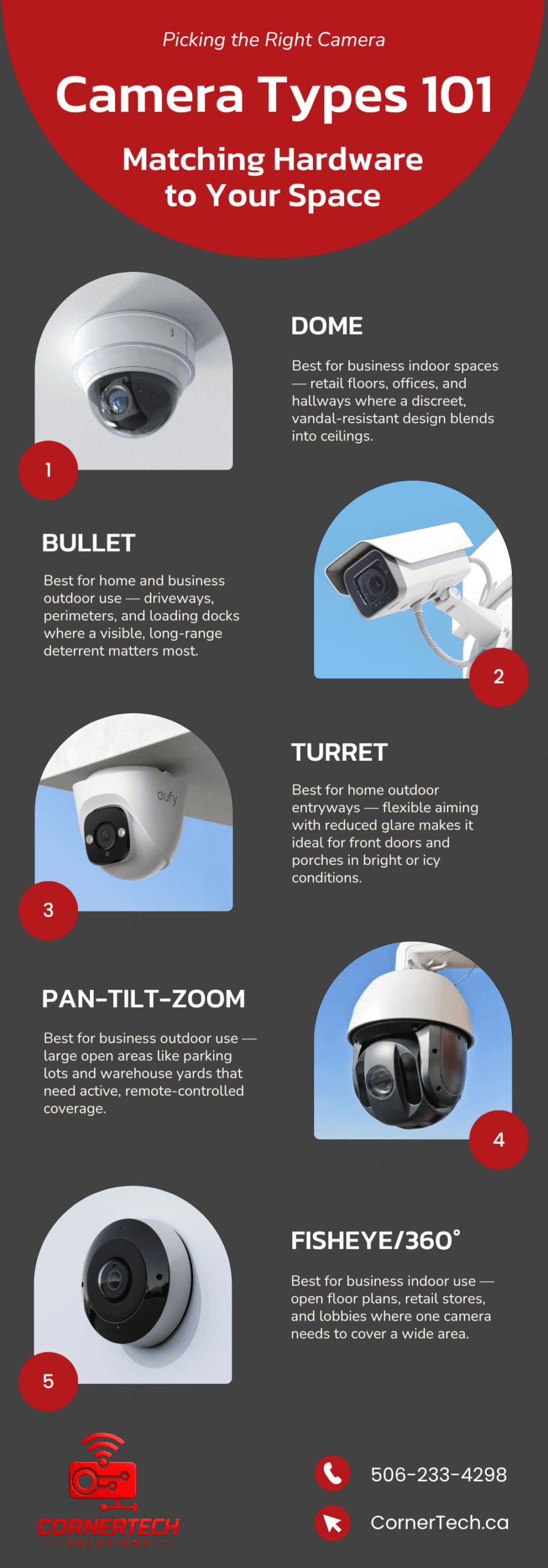
- Dome cameras are compact, vandal-resistant, and blend into ceilings or eaves — great for retail interiors and corporate lobbies.
- Bullet cameras are the classic long, cylindrical shape you see mounted under eaves. They’re highly visible (a strong deterrent) and excellent for long-range coverage like driveways or parking lots.
- Turret cameras sit in a ball-and-socket housing, giving you flexible aiming angles without the “goldfish bowl” glare dome cameras sometimes get in bright or icy conditions. We love turrets for entryway coverage specifically because they avoid that glare problem in winter sun.
Best Foundational Options by Property Type
For residential properties:
- 2-4 PoE turret cameras covering entry points and driveways
- A compact NVR with local storage
- Optional smart doorbell camera for package protection
For growing commercial footprints:
- Wide-angle dome cameras for interior monitoring
- Long-range bullet cameras for perimeter and parking coverage
- Centralized NVR or hybrid cloud storage for multi-location access
How Many Security Cameras Do You Really Need?
This is one of the most common questions we get, and the honest answer is: it depends on your architecture, not just your square footage.
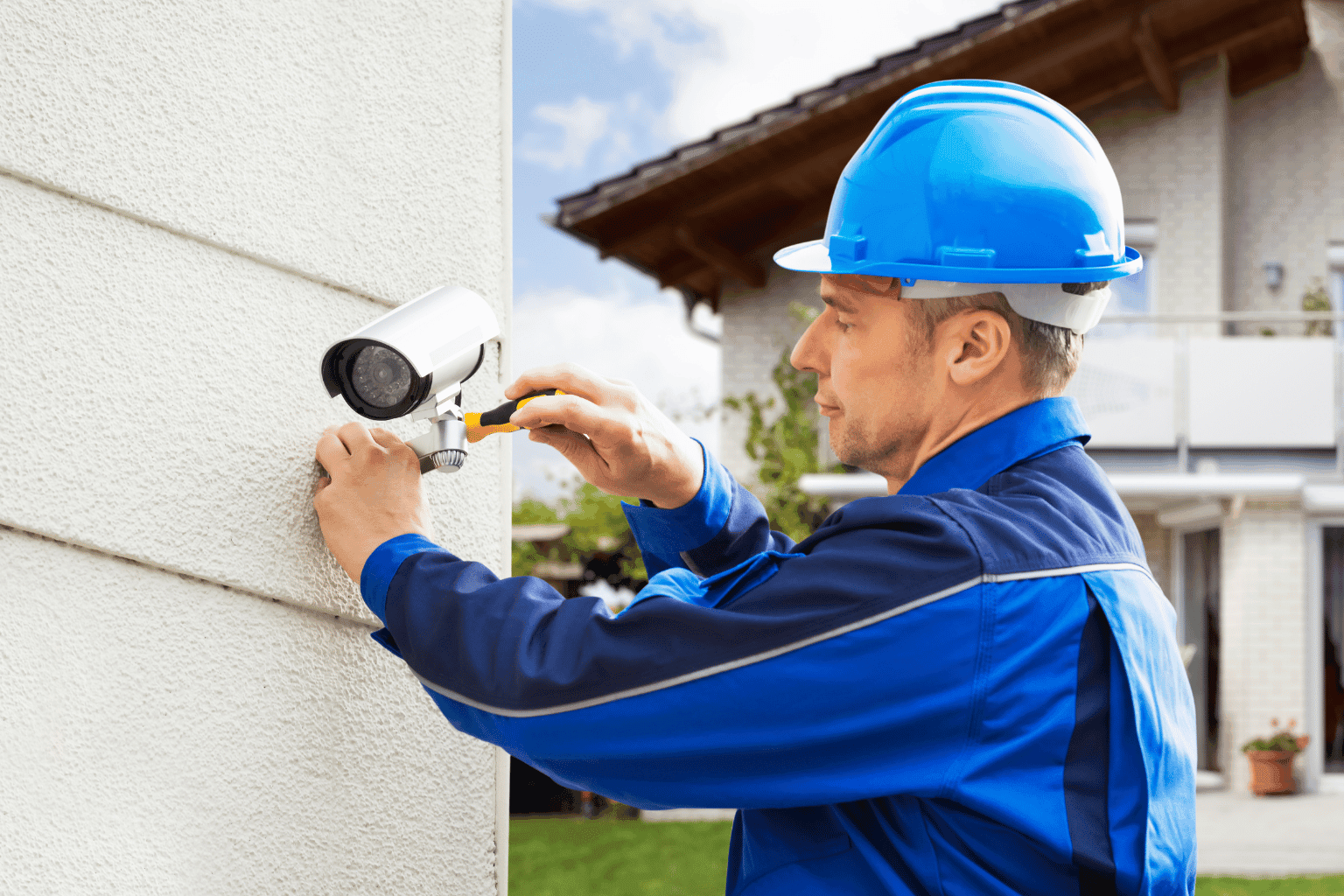
Camera density should be dictated by three things — your perimeter lines, your ingress/egress points, and your interior choke points (hallways, registers, stockrooms, server closets). A sprawling single-story home might need fewer cameras than a compact two-story with multiple entry points, simply because of how the sightlines work.
Here’s the structural matrix we use when scoping a security camera installation Moncton project for different property types:
Property Footprint | Recommended Camera Count | Primary Camera Typology | Essential Coverage Focal Points | Storage Infrastructure Required |
Small Home | 2–4 Units | Wireless or PoE Turret | Front driveway, main entryway, back deck area | Local MicroSD or Compact 4-Channel NVR |
Large Home | 6–8 Units | Wired 4K PoE Turrets & Bullets | All perimeter yards, detached garages, primary paths | Dedicated 8-Channel NVR (2TB+ Storage) |
Retail Store | 8–16 Units | High-Res Wide-Angle Domes | Point-of-Sale registers, inventory rooms, exits | 16-Channel Centralized NVR & RAID Storage |
Restaurant | 6–12 Units | Vandal-Proof Indoor Domes | Kitchen safety lanes, cash drawers, dining floor, bar | Enclosed, high-temperature resilient NVR rack |
Corporate Office | 8–24 Units | Discreet Dome & Access Control | Main reception, server closets, common corridors | Cloud-hybrid integration with managed access |
Warehouse | 16–32+ Units | Long-Range Bullets & PTZ | Loading docks, high-rack aisles, shipping areas | Enterprise Server Array with Hot-Swappable Drives |
Parking Lot | 4–12 Units | Vari-focal Bullets & License Plate Captures | Main access gates, dark corners, light poles | High-bandwidth wireless bridges or deep-trenched fiber |
Notice how storage scales right alongside camera count. More cameras mean more footage, and that footage needs somewhere reliable to live — which brings us to a topic Moncton property owners can’t afford to ignore: winter resilience.
Sub-Zero Resilience: Security Cameras That Work During Canadian Winters
We’ve said it already, but it bears repeating — this is the single biggest differentiator between a security camera installation Moncton system that lasts and one that fails within its first winter.
Maritime winters bring a specific combination of threats: heavy snow accumulation, freezing rain that coats every exposed surface in ice, sub-zero cold spikes, and constant humidity swings that fog up lenses. A camera rated for “outdoor use” in a generic sense might still fail here, because generic outdoor ratings often assume mild, dry climates.
What actually matters for Moncton deployments:
IP67 weatherproof rating (minimum)
This is non-negotiable for us. IP67-rated housings are sealed against dust and can survive temporary submersion, which translates to real protection against driving freezing rain and deep snow drifts.
Integrated heaters
Some premium camera housings include small internal heating elements that keep the lens clear of frost and condensation. Without this, you risk a camera that's technically "on" but recording nothing but a foggy white blur during a cold snap.
Extended operating temperature range
Look for cameras rated to at least -30°C. Cheaper units often only guarantee performance down to -10°C or 0°C, which simply doesn't cut it here.
Weatherproof cable routing
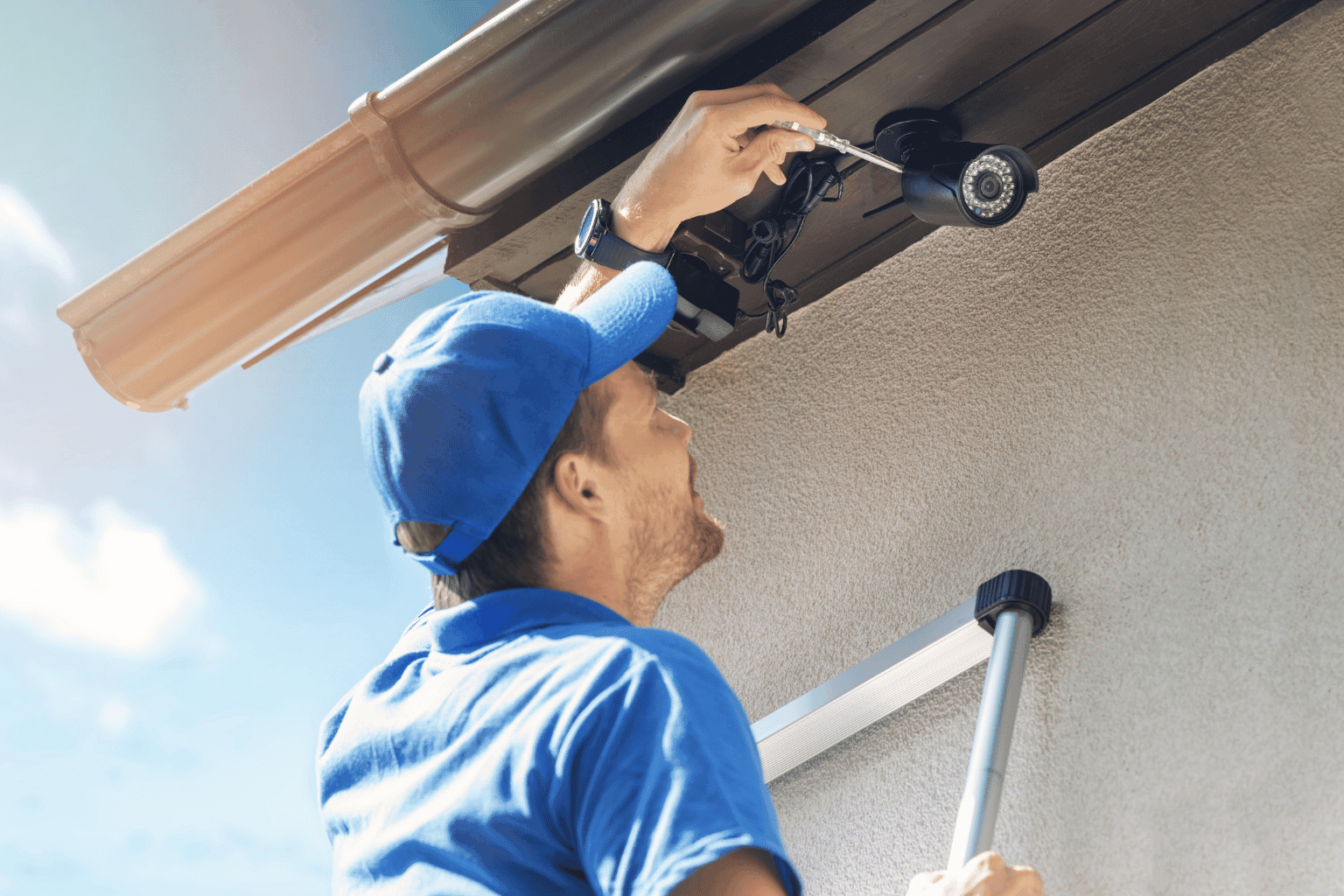
This one's often overlooked. A poorly routed cable can let freezing rain track directly into your building's wiring infrastructure. That's why we always incorporate a physical downward "drip loop" in the Cat6 line right before it enters an exterior wall — gravity pulls water off the loop instead of letting it travel inside.
We treat lens fogging, ice accumulation, and cold-induced hardware failure as engineering problems to solve at the design stage, not issues to troubleshoot after the fact.
Wired vs. Wireless Security Cameras: The Final Verdict on Reliability
We get asked constantly which is “better” — wired or wireless. The honest answer is that it depends on what you’re optimizing for, so let’s break it down across the factors that actually matter.
Data Reliability
Wired PoE systems transmit data over a physical cable, meaning no signal drops from interference or distance. Wireless systems depend entirely on your Wi-Fi network's strength and stability — great in ideal conditions, less great when a snowstorm knocks out your internet.
Internet Dependence
Wireless cameras generally need an active internet connection to function and to stream to your phone. Wired systems with local NVR storage can keep recording locally even if your internet goes down, which matters a lot during Moncton's occasional winter outages.
Installation Labor Costs
Wireless setups win here — quicker installs, less cabling, lower upfront labor. Wired systems require more structured cabling work, which adds cost but pays off in long-term reliability.
Battery Maintenance Overhead
This is where wireless cameras lose ground fast in our climate. Cold weather drains lithium-ion batteries significantly faster than manufacturers' room-temperature estimates suggest. That means more frequent charging, more maintenance visits, and more risk of a dead camera at exactly the wrong moment.
Cybersecurity Hardening
Wired systems on a properly segmented network are generally easier to secure against outside threats. Wireless systems introduce additional attack surface through the Wi-Fi connection itself, which means extra diligence is required — strong encryption, regular firmware updates, and isolated network segmentation.
Modular Expandability
Wired PoE infrastructure scales beautifully — adding a camera is usually just running another cable back to the NVR. Wireless systems can hit bandwidth ceilings faster as you add units, especially in larger commercial deployments.
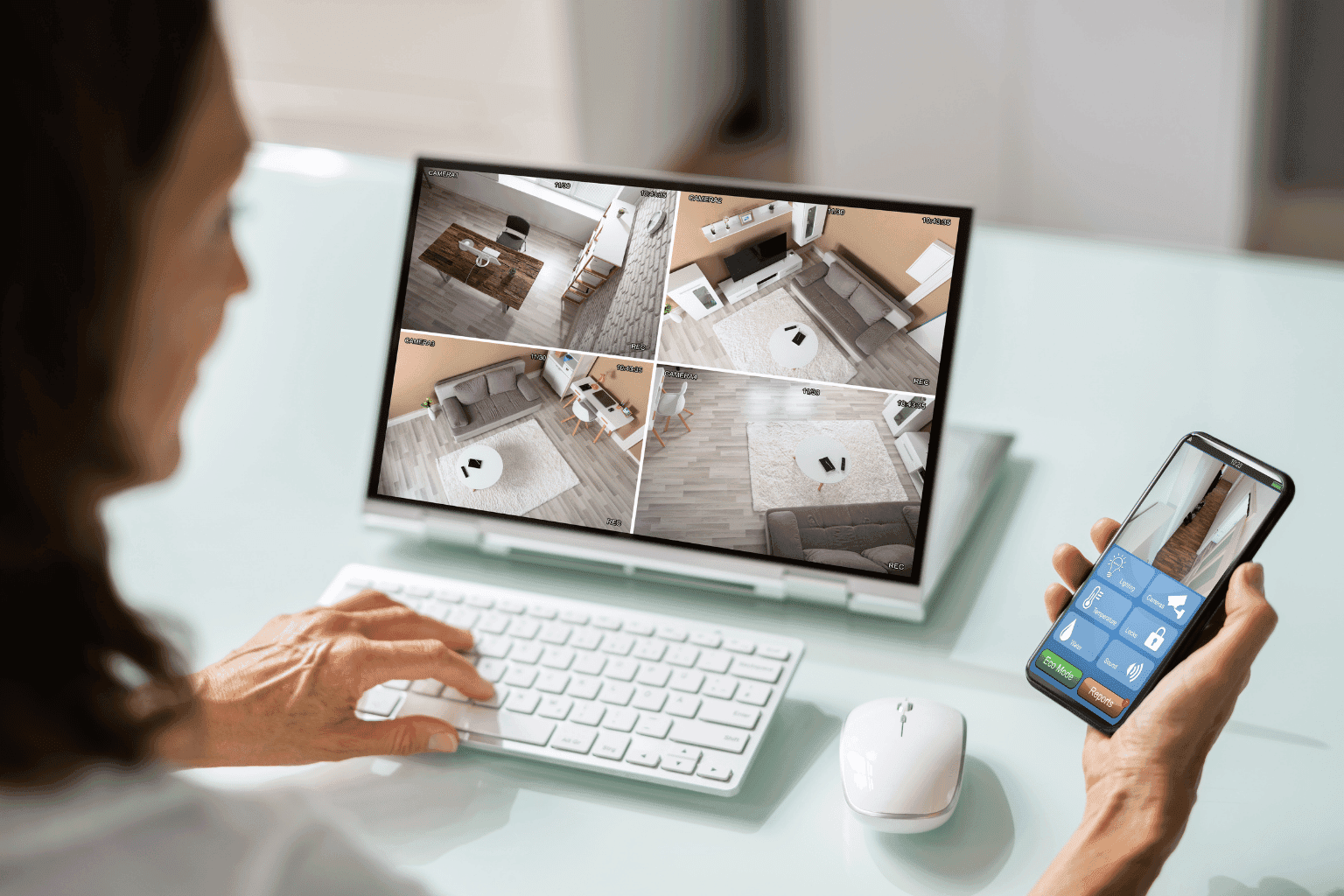
Our verdict: For any exterior or mission-critical camera in a security camera installation Moncton project, wired PoE is the more dependable long-term investment. Wireless still has its place for quick interior installs or supplementary coverage, but we don’t recommend leaning on battery-powered units for your primary outdoor perimeter defense here.
AI-Powered Security Cameras: Are They Worth It?
One of the biggest advances in surveillance technology over the past few years has been the shift toward edge AI — meaning the camera itself, not a distant cloud server, does the thinking. This matters enormously for real-world usability, because it’s the difference between getting a genuinely useful alert and getting fifty notifications a day because a plastic bag blew across your driveway.
Here’s what modern AI-powered systems actually deliver:
True person detection
The system distinguishes an actual human silhouette from shadows, branches, or moving snow — dramatically cutting false alarms.
Vehicle tracking
Cameras can identify and track vehicles specifically, useful for parking lots, driveways, and loading docks.
Package protection
Smart zones can trigger alerts specifically when a package is dropped off or picked up, which is a huge win for e-commerce-heavy households and retail receiving areas.
Animal filtering
No more 3 a.m. alerts because a raccoon wandered through the yard. The system learns to filter out non-threat movement.
Restricted facial recognition matrices
Used carefully and in compliance with privacy regulations, this can help authorized personnel access controlled areas or flag known individuals in commercial settings.
Smart real-time mobile alert configurations
Instead of a flood of notifications, you get targeted, prioritized alerts sent straight to your phone based on the type of activity detected.
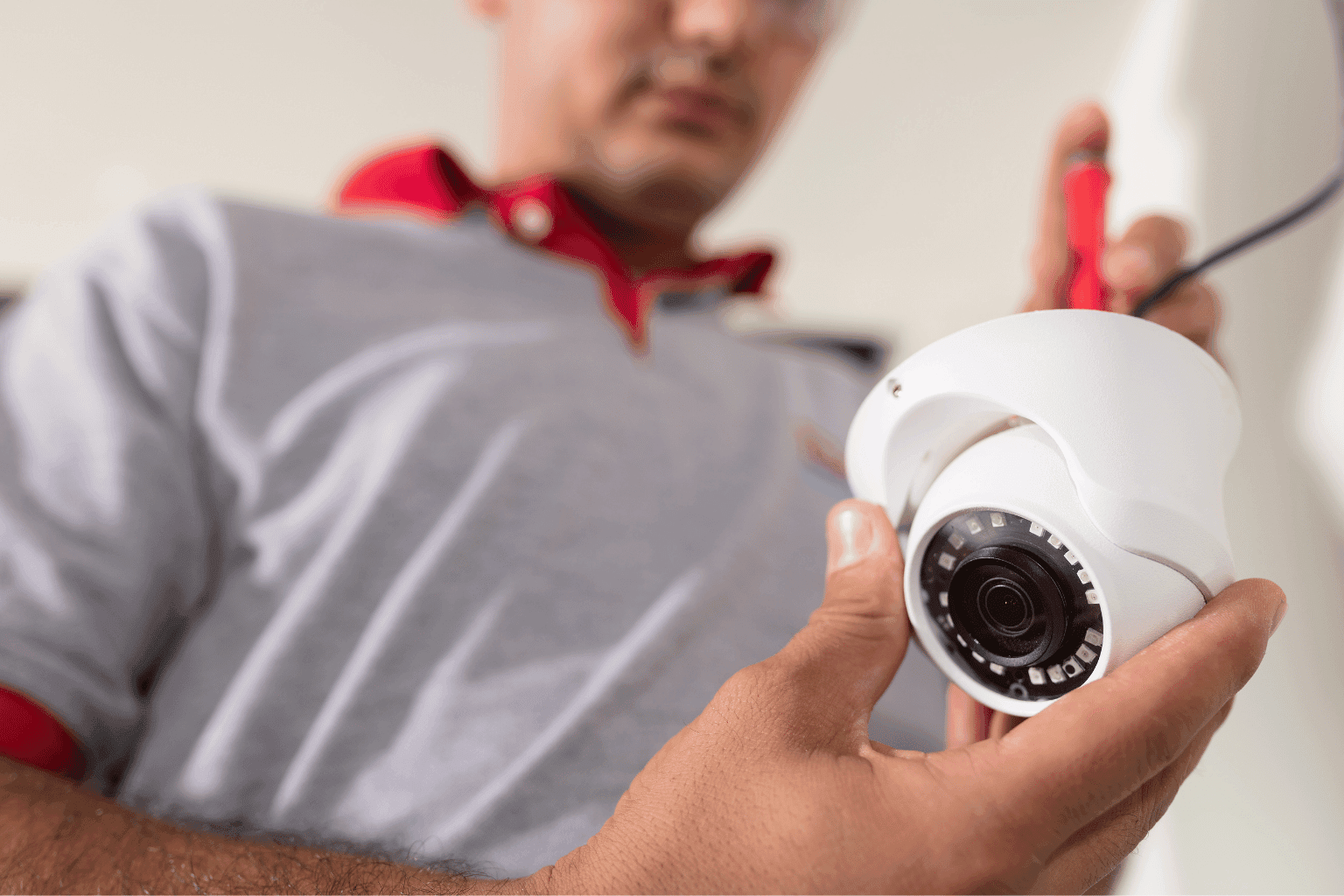
The real-world ROI here isn’t just convenience — it’s trust. When your alerts are accurate, you actually respond to them. Systems that cry wolf get ignored, and an ignored alert is a security system that’s failed at its one job.
By 2026, most of this analysis happens directly on the camera’s internal chipset rather than being shipped off to the cloud for processing. That’s a meaningful shift — it means faster response times, lower bandwidth requirements, and less dependence on your internet connection staying rock-solid.
Legacy CCTV vs. Modern IP Cameras: Navigating the Architectural Paradigm Shift
If you’ve got an older CCTV system installed, you might be wondering whether it’s worth upgrading. Here’s the honest technical breakdown.
Resolution
Legacy CCTV systems run on analog signals, which cap out at a fairly limited resolution ceiling. Modern IP cameras stream digital data and routinely deliver true 4K resolution — meaning you can actually zoom into footage and make out a face or license plate instead of getting a blurry mess.
Remote Access
Analog CCTV systems typically require you to be physically present at the DVR to review footage, or rely on clunky, limited remote viewing setups. IP systems are built around secure remote smartphone monitoring from anywhere, which is now table stakes for anyone running a security camera installation Moncton business owners expect to check in on remotely.
Cabling Requirements
CCTV relies on heavy coaxial cable, which is bulkier, harder to route, and offers no data efficiency benefits. IP cameras use lightweight Cat6 PoE cabling, which carries both power and data in a single line — simpler installation, cleaner architecture.
Local Storage Infrastructure
CCTV pairs with a DVR (Digital Video Recorder), which is generally more limited in scalability. IP systems pair with an NVR (Network Video Recorder), offering far more flexible storage scaling, RAID redundancy options, and easier integration with cloud backup.
Total Lifecycle Cost
While CCTV hardware is often cheaper upfront, the limited resolution, bulkier cabling, and lack of smart features tend to mean a shorter useful lifespan and more limited resale or upgrade value. IP systems cost more initially but offer a longer functional life and easier incremental upgrades.
Long-Term Upgrade Potential
This is where IP systems really pull ahead. Because IP cameras operate as individual smart network devices, you can upgrade a single camera, add analytics software, or expand storage without ripping out your entire infrastructure. CCTV systems are far more rigid — often requiring a full system replacement to gain any meaningful new capability.
Why CornerTech Solutions
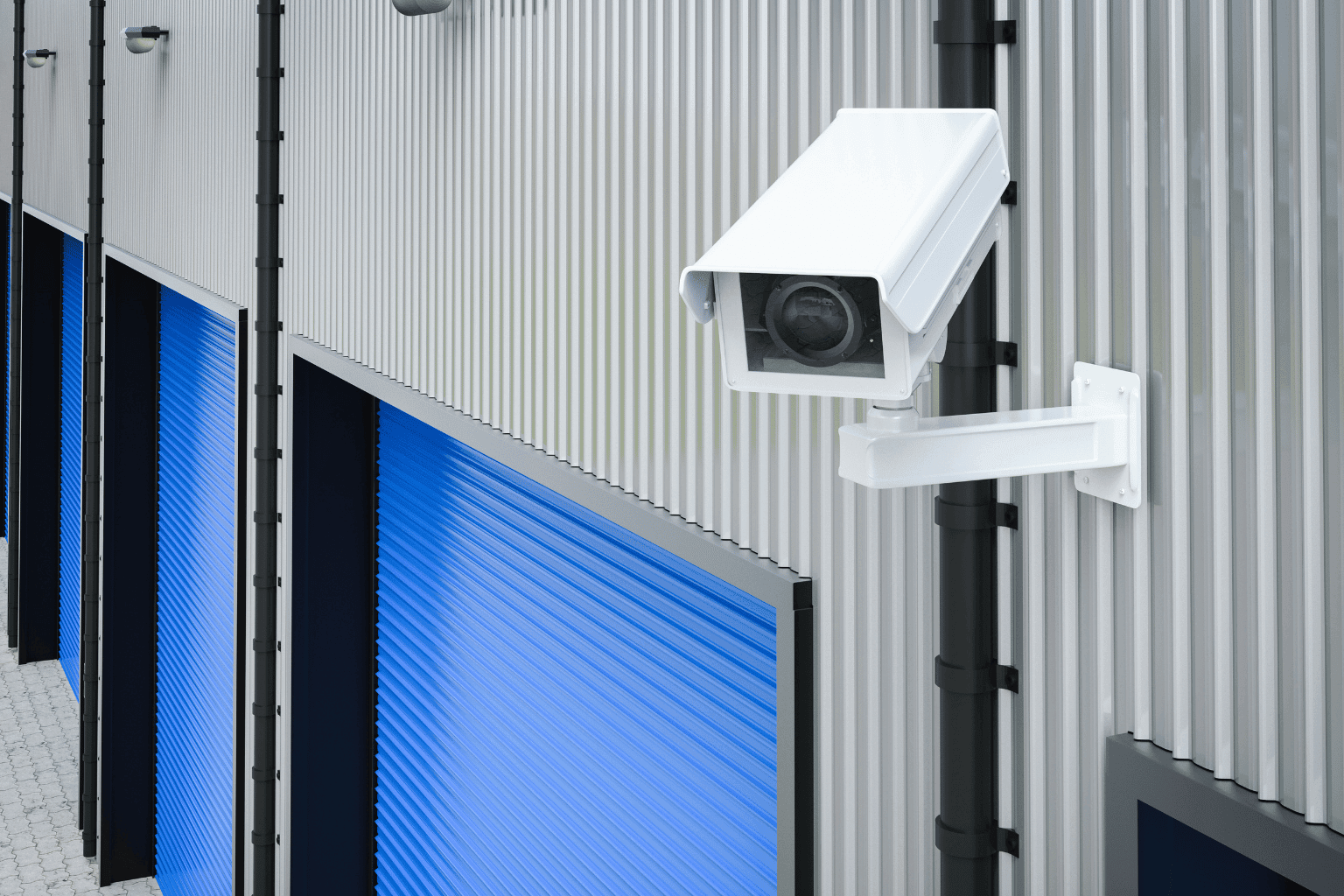
We built our reputation on understanding what actually happens to security equipment during a real Moncton winter — not what a spec sheet promises in ideal lab conditions. Every security camera installation Moncton project we take on is engineered around climate durability, transparent pricing, and genuinely useful smart features, not gimmicks. We also design and install complete home security systems Moncton homeowners can rely on year-round, combining cameras, monitoring, alarms, and smart security technology into one practical solution.
If you’re ready to protect your property with a system built for our conditions, reach out to CornerTech Solutions for a free custom quote. We’ll walk your property, map your coverage needs, and build a system that’s still working reliably five winters from now.
Frequently Asked Questions: Authoritative Insights on Moncton Surveillance Infrastructure
The total cost for professional surveillance deployment varies considerably based on structural realities. Rather than relying on rigid flat rates, a professional security camera installation Moncton price profile is dictated directly by total camera density, exterior wiring complexity, structural constraints (commercial vs. residential), local storage needs (NVR scale), and existing network infrastructure health.
An average residential property generally requires 3 to 6 cameras for comprehensive perimeter protection. To maximize safety, sensors should be explicitly allocated to cover your high-vulnerability access vectors: the primary driveway, the main front entryway, side pathways, and any low-visibility back doors or basement access windows.
Yes, professional IP security cameras can function completely independent of local Wi-Fi networks. By utilizing structured Power over Ethernet (PoE) hardwired lines, data transmission and electric power are delivered safely via a single physical Cat6 cable directly to a local Network Video Recorder (NVR), ensuring continuous uptime regardless of wireless interference.
Commercial-grade surveillance systems can be fully configured to support either operational framework. Systems can record continuously 24/7, capture clips based entirely on specific AI-driven motion triggers, or implement a hybrid solution where the system saves low-resolution footage continuously and scales to crisp 4K recording the moment a person or vehicle perimeter breach occurs.
Standard surveillance systems will go offline immediately when primary grid power fails unless protective backup measures are integrated. To guarantee minimal operational downtime during local Moncton winter grid failures, system deployments should include a dedicated Uninterruptible Power Supply (UPS) battery backup array capable of keeping critical cameras and NVR recording decks powered for hours.
While highly convenient for quick interior installations, completely battery-powered wireless cameras are an inherently flawed choice for severe outdoor environments. Sub-zero temperatures drain lithium-ion batteries rapidly, often causing complete system shutdowns during extreme cold snaps, which makes hardwired PoE infrastructure the more reliable architecture for outdoor winter resilience.
Legacy CCTV systems utilize analog signals transmitted via heavy coaxial cables back to a localized DVR, severely limiting maximum image resolution. Modern IP cameras operate as individual, intelligent network devices that stream rich digital video data over lightweight Cat6 cables directly to an NVR, enabling advanced 4K video resolution, edge AI processing, and secure remote mobile encryption.
Yes, many major insurance providers offer reduced premium rates for properties protected by professionally installed surveillance systems. Hardwired security infrastructures function as active deterrents against vandalism and theft, while supplying time-stamped video evidence that helps expedite claim resolutions and shields property owners from fraudulent liability claims.
CCTV systems rely on analog signals sent over coaxial cable to a local DVR, which caps out at lower resolution and limits remote access options. IP cameras are network-based devices that stream digital video over Cat6 PoE cabling directly to an NVR, unlocking true 4K resolution, secure remote smartphone monitoring, and edge AI analytics that analog systems simply can't support.
For most residential entryways and driveways, 1080p still delivers workable footage, but it struggles once you need to zoom in on a face or license plate. 2K strikes a solid middle ground for larger properties and small commercial spaces. For any security camera installation Moncton business relies on for point-of-sale areas, parking lots, or long-range perimeter coverage, we recommend 4K — the extra resolution is what actually lets you identify a face or plate after the fact rather than just confirming that "someone was there."
Traditional infrared night vision captures clear motion but only in monochrome, which makes fine facial detail difficult to make out. Zero-light color night vision, now standard on higher-end 2026 systems, uses ultra-sensitive sensors to capture full color, high-definition footage even in near-total darkness — a major improvement for actually identifying who's on your property after dark, not just that something moved.
We recommend a physical inspection at least twice a year, ideally before and after winter, to check for ice buildup, housing seal integrity, and cable wear at entry points. Firmware updates should be applied as they're released to keep cybersecurity protections current, and NVR storage drives should be checked periodically for wear, especially in systems running continuous 24/7 recording.
Yes, and this is one of the biggest advantages of a properly designed IP system. Because each camera operates as its own smart network device, expanding coverage is usually as simple as running an additional Cat6 line back to your NVR, provided your existing storage and channel capacity have room to grow. This is why we always build initial security camera installation Moncton systems with some expansion headroom in the NVR itself, so scaling up later doesn't mean starting over.
Storage duration depends on your NVR capacity, resolution settings, and whether you're recording continuously or only on motion triggers. A typical residential setup with a few terabytes of storage can retain 4K footage for several weeks to a couple of months, while commercial systems with RAID arrays or hybrid cloud backup can be configured to retain months of footage, which matters for insurance claims and extended investigations.